Venus Life Finder
The first private mission to another planet aims to answer one of science’s oldest questions — are we alone? — by plunging a small probe into the sulphurous clouds of Earth’s nearest neighbour.
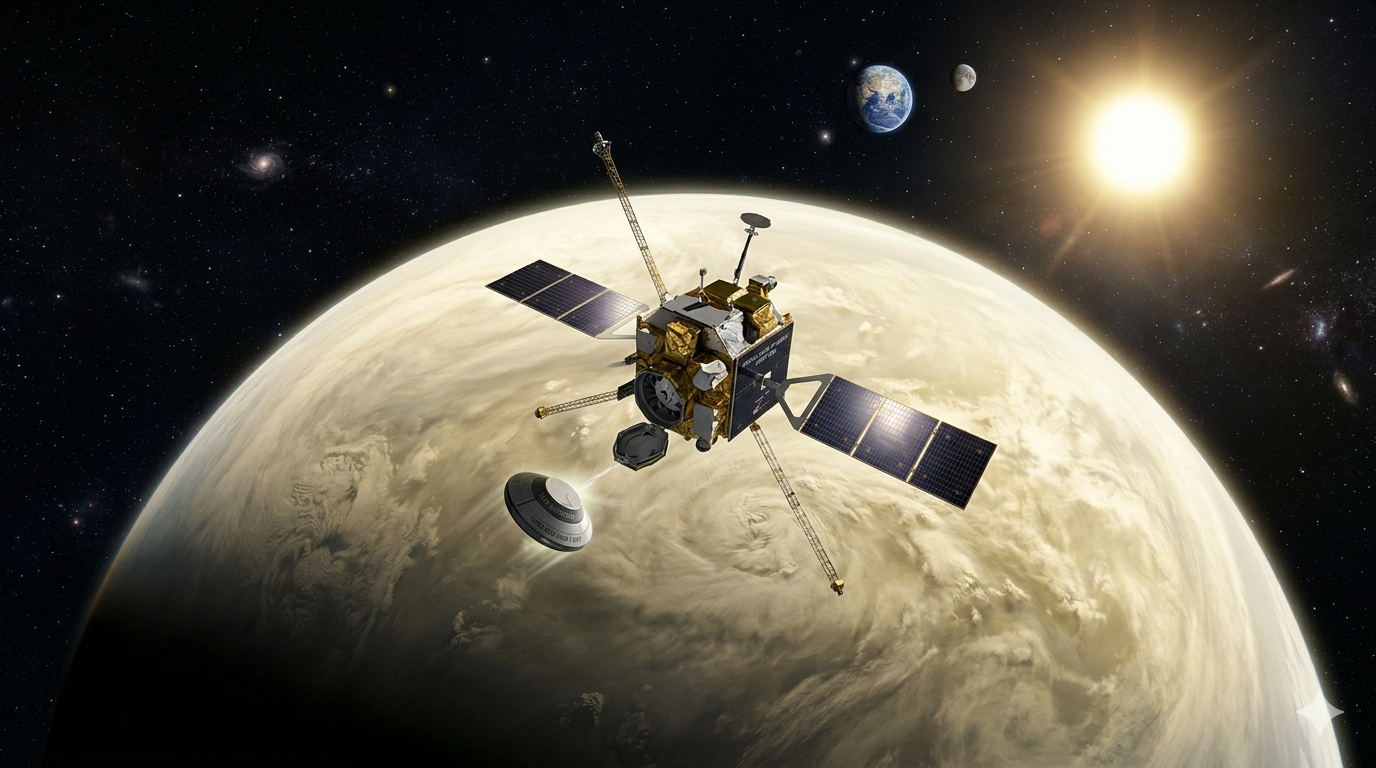
For decades, Venus has been the overlooked twin of Earth — scorching, inhospitable and largely ignored in favour of Mars. But a 2020 paper reporting the detection of phosphine gas in the Venusian atmosphere, a compound on Earth produced only biologically or industrially, reignited an old and tantalising question: could life exist in the temperate cloud layers of Venus? That controversy catalysed a small, determined team into action.
The result is the Venus Life Finder (VLF) mission — the first privately funded interplanetary spacecraft in history, born from a collaboration between launch company Rocket Lab and a science team led by planetary scientist Sara Seager at the Massachusetts Institute of Technology. It is a mission that is cheap, focused and audacious.
Why Venus?
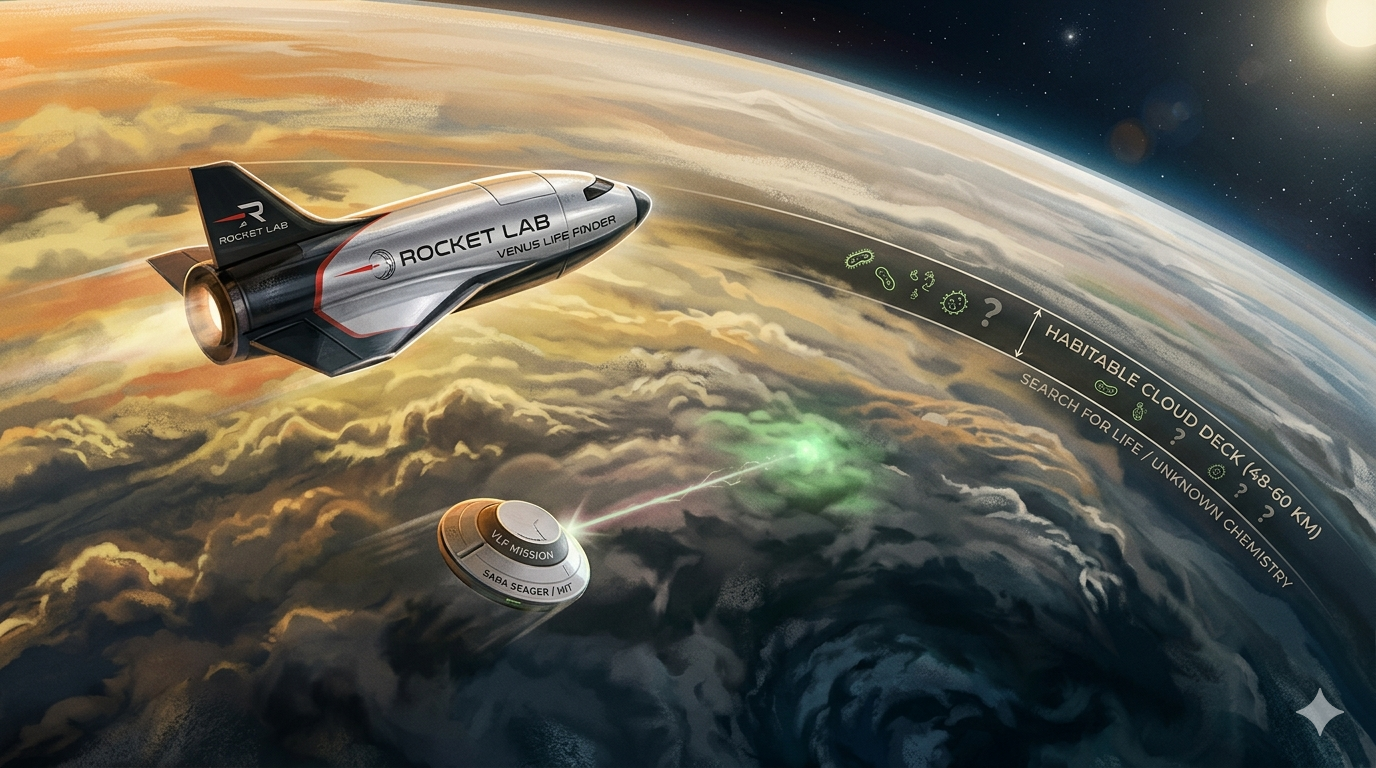
Venus’s surface is a hellscape: temperatures exceeding 465 °C and pressures ninety times that of Earth’s surface. But at altitudes of 48–60 km, the clouds tell a different story. Temperatures there hover between 0 °C and 60 °C, and pressures are roughly Earth-like — conditions that are, in principle, tolerable for microbial life.
“There are these lingering mysteries on Venus that we can’t really solve unless we go back there directly. Lingering chemical anomalies that leave room for the possibility of life.” — Sara Seager, MIT, Principal Investigator
Among those anomalies: a mysterious UV-absorbing agent of unknown identity, unexplained ratios of sulphur dioxide and water, traces of oxygen, and cloud particles of unknown composition. These are not merely curiosities — they are potential fingerprints of chemistry, or biology, that science has yet to explain.

The Mission Architecture
The spacecraft consists of two parts: a Photon Explorer cruise stage built by Rocket Lab, which will carry the mission across interplanetary space, and a small atmospheric entry probe — weighing around 50 lbs — that will be released to plunge into the Venusian atmosphere.
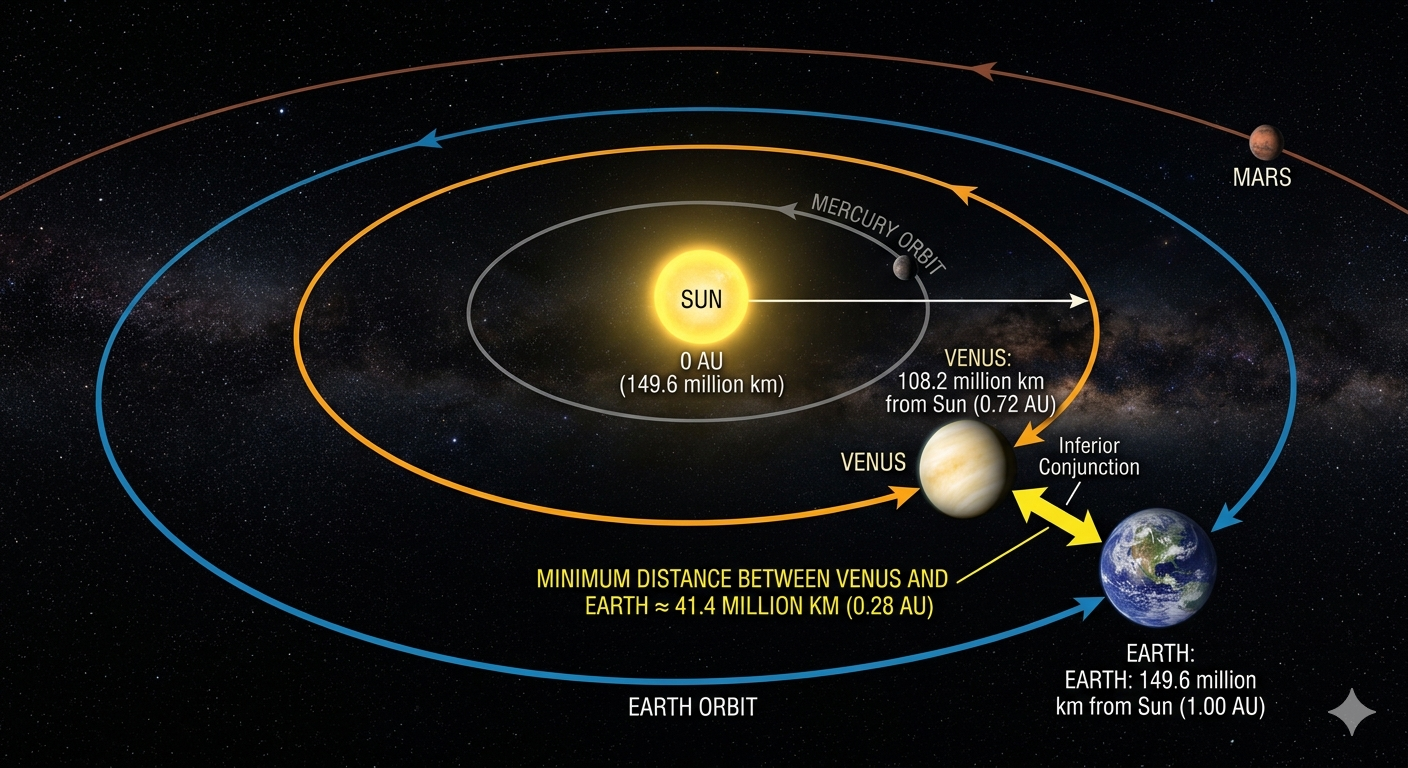
After launch from Rocket Lab’s Launch Complex 1 at Māhia Peninsula, New Zealand, the Photon spacecraft will first enter low Earth orbit. It will then perform a series of burns and a lunar gravity assist to slingshot toward Venus, arriving after a 128-day cruise. When it reaches Venus, the probe will be released and will descend through the cloud layers. The science window lasts approximately 5–6 minutes — a brief but information-dense encounter with an alien sky.
The Key Instrument — Autofluorescence Nephelometer (AFN)
The probe carries just one scientific instrument, a specially designed autofluorescence nephelometer (AFN). It shines a laser into the cloud droplets it encounters during descent. If organic compounds — complex carbon-based molecules — are present, they will fluoresce (glow) in a characteristic way. This is not a direct life-detection instrument, but a detection of organic chemistry would indicate that the building blocks, or even the products, of biology exist in Venus’s atmosphere. The entire science payload weighs less than 1 kilogram.
The Science Team & Funding
The mission is led by Sara Seager, Class of 1941 Professor of Planetary Sciences at MIT and one of the world’s foremost exoplanet scientists. The science team includes fewer than thirty people — a lean, focused group that contrasts sharply with traditional NASA planetary missions involving hundreds of engineers over decades.
Rocket Lab’s CEO Peter Beck has described the mission as a “nights-and-weekends project,” driven by passion more than institutional mandate. The total mission cost is estimated at under $10 million USD — a fraction of a per cent of the cost of a typical NASA flagship mission. Funding has come from Rocket Lab itself, MIT, Breakthrough Initiatives, a NASA NIAC Phase I award, and undisclosed private philanthropists.
“We hope this is the start of a new paradigm where you go cheaply, more often, and in a more focused way. This is a newer, nimbler, faster way to do space science. It’s very MIT.” — Sara Seager
The Bigger Picture — Morning Star Missions
The Rocket Lab mission to Venus is only the first in a planned series of escalating missions under the umbrella of the Morning Star Missions to Venus programme. If the first probe detects organic chemistry, a second, more capable mission would deploy a longer-lived atmospheric balloon to conduct extended observations and more sophisticated chemical analysis. The ultimate ambition is an atmospheric sample return — physically bringing back a sample of the Venusian clouds to Earth for detailed laboratory analysis.
The mission’s scientific significance extends beyond Venus itself. If life — even microbial, acid-tolerant life — were found in the Venusian clouds, it would represent the most transformative discovery in the history of science, confirming that life is not a singular accident of Earth but a cosmic phenomenon. Even a negative result would sharpen our understanding of what planetary conditions are truly necessary for habitability.
A New Paradigm in Planetary Science
What makes the Venus Life Finder mission remarkable is not just its destination, but its philosophy. Traditional interplanetary missions from NASA or ESA typically cost billions of dollars, require decades of development, and carry a wide array of instruments designed to answer many questions simultaneously. Seager’s approach inverts this: go cheap, go fast, go often, and ask one focused question at a time.
The mission also demonstrates that the era of private interplanetary exploration has truly begun. If it succeeds, the Venus Life Finder will become the first privately funded spacecraft to reach another planet — a milestone that could reshape how humanity explores the solar system in the decades to come.
Whether it finds evidence of organic chemistry or not, the probe will send back data that no instrument has collected from Venus’s cloud layer in nearly four decades. And in doing so, it will remind the world that Earth’s nearest planetary neighbour — long overshadowed by Mars — may still hold the most profound secret of all.

Leave a Reply