Biology · Animal Science · Nature
The Secret Sleep of Nature
Hibernation — a remarkable survival strategy that lets organisms pause life itself through the coldest, harshest months of the year.
Imagine sleeping through an entire winter — no food, barely any heartbeat, and yet waking up perfectly healthy in spring. This is not science fiction. Millions of animals do exactly this every year. The phenomenon is called hibernation, and it is one of nature’s most astonishing adaptations.
What is Hibernation?
Definition
Hibernation is a state of inactivity and metabolic depression in endotherms (warm-blooded animals), characterised by low body temperature, slow breathing, low heart rate, and reduced metabolic rate — allowing the organism to conserve energy during periods of food scarcity or extreme cold.
During hibernation, an animal’s body temperature can drop to near-freezing, its heart rate may slow from hundreds of beats per minute to just a few, and its metabolism can fall by up to 99%. The organism survives entirely on fat reserves accumulated before the sleep began.
Types of Hibernation
Not all hibernation is the same. Scientists recognise several distinct forms depending on the organism and conditions:
True Hibernation
A deep, prolonged state where body temperature drops dramatically and the animal cannot be easily awakened. Example: ground squirrels, hedgehogs.
Torpor
A lighter, shorter sleep where body temperature stays relatively high and the animal can be roused. Example: bears, raccoons.
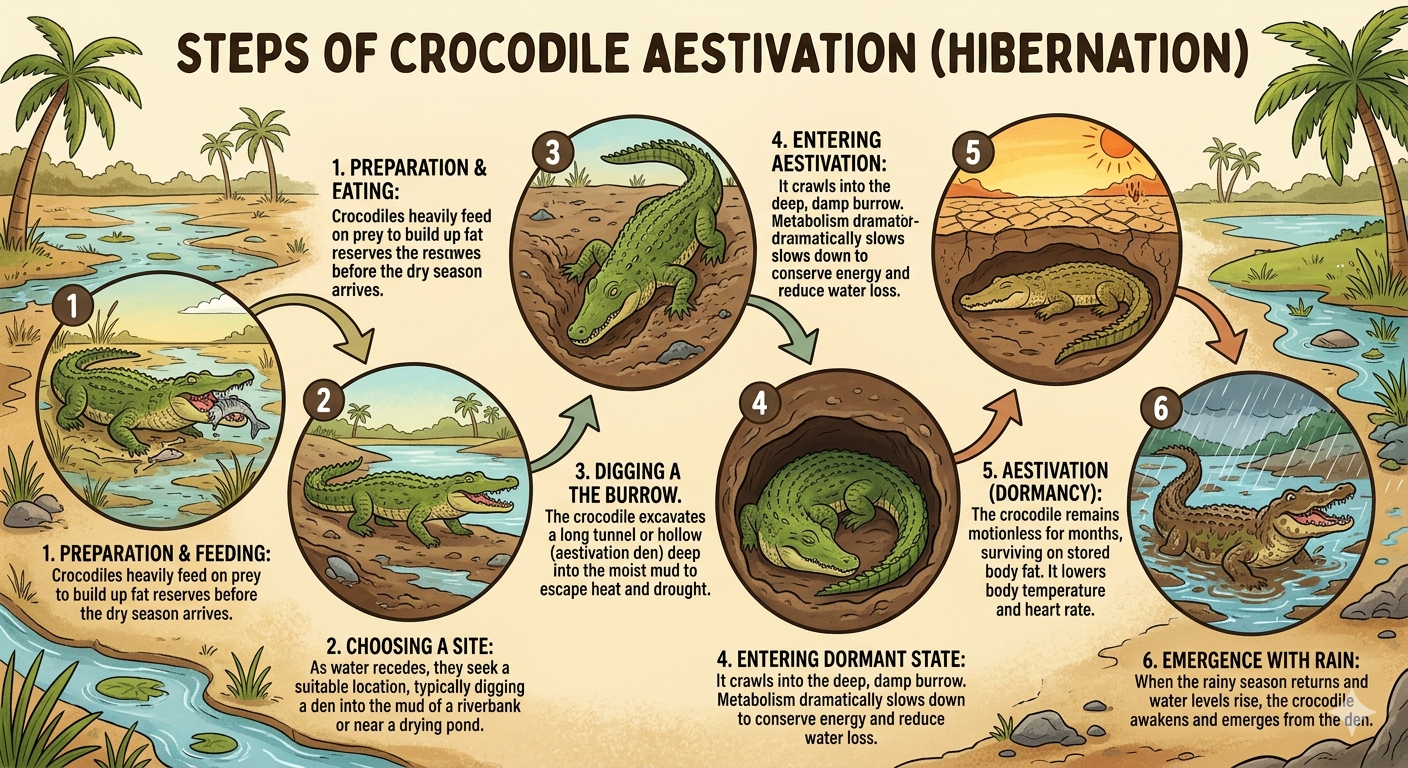
Aestivation
Summer hibernation to escape extreme heat and drought. The organism goes dormant to avoid dehydration. Example: lungfish, snails.
Daily Torpor
A mini-hibernation lasting just hours, usually overnight, to conserve energy quickly. Example: hummingbirds, bats.
Animals That Hibernate
Hibernation occurs across a wide variety of species, from tiny insects to large mammals:
- 🐻 Bears — Enter a light torpor for 5–7 months. Female bears even give birth and nurse cubs during this period without fully waking.
- 🦔 Hedgehogs — True hibernators whose heart rate drops from 190 bpm to just 20 bpm. They can lose up to 30% of their body weight.
- 🐿️ Ground Squirrels — Arctic ground squirrels endure body temperatures of −2.9°C, the lowest recorded in any mammal.
- 🐸 Wood Frogs — Remarkable amphibians that survive being literally frozen solid, with no heartbeat, resuming activity in spring.
- 🐠 Lungfish — Aestivate inside a mucous cocoon buried in dry mud for up to four years, breathing through a small air hole.
- 🦇 Bats — Hibernate in caves; their heart rate falls from 400 bpm to just 25 bpm. Some species hibernate for over six months.
Benefits of Hibernation
Hibernation confers powerful evolutionary advantages that have allowed these species to thrive in harsh environments:
Why Don’t Humans Hibernate?
Humans are warm-blooded mammals, just like bears and squirrels — so why can’t we hibernate? The answer lies in our evolutionary history and biology.
Humans evolved in relatively stable, warm climates in Africa where food was available year-round, so there was no survival pressure to develop hibernation mechanisms. Over millions of years, our ancestors never needed to enter dormancy, and so the genetic and physiological machinery for deep hibernation was never developed.
Additionally, the human brain is exceptionally large and energy-hungry. Our neurons require a constant supply of glucose and oxygen. A significant drop in body temperature would disrupt brain function severely — something smaller-brained hibernators tolerate far better. Humans also lack the ability to accumulate sufficient brown fat (the specialised fat that generates heat to safely rewarm a hibernating body).
“Evolution does not give organisms what they might find useful — only what their ancestors actually needed to survive.”
What If Humans Could Hibernate?
Scientists and space agencies are actively researching induced human torpor — and the potential benefits are extraordinary:
Medical Benefits
Lowering the body temperature slows cell death, which could revolutionise trauma medicine. Patients with severe injuries could be placed in a cooled torpor-like state to “buy time” until surgeons can operate — a technique already partially used in therapeutic hypothermia for cardiac arrest survivors.
Anti-Aging Effects
Hibernating animals show dramatically slowed cellular ageing during dormancy. If humans could hibernate safely, it might slow age-related cellular damage, reduce oxidative stress, and potentially extend healthy lifespan.
Cancer & Disease Treatment
A metabolically suppressed body could tolerate otherwise lethal doses of radiation or chemotherapy, making cancer treatment far more effective while reducing side effects.
Space Exploration
NASA and ESA are funding research into human torpor for long-duration space missions. A crew hibernating for a journey to Mars would consume fewer resources, suffer less muscle wastage, and endure the psychological toll of isolation far better.
Mental Health Recovery
Deep restorative sleep is already known to heal the brain. Controlled torpor could allow the nervous system to reset more completely, potentially benefiting people with burnout, severe depression, or neurological conditions.
Fascinating Facts About Hibernation
Conclusion
Hibernation is far more than a long nap — it is one of biology’s most elegant solutions to the problem of survival. From the frozen wood frog to the dreaming bear, organisms across the animal kingdom have mastered the art of pausing life. While humans lack this ability by evolutionary design, the science of hibernation holds tantalising promise: longer lives, better medicine, and perhaps even the key to reaching the stars.
The next time you complain about a cold winter morning, spare a thought for the hedgehog curled beneath the leaves — deep in nature’s most perfect sleep.
Leave a Reply