The Weed That Drinks
Space Water
A riverside plant unchanged since the dinosaurs is producing water with a chemical fingerprint so alien, scientists initially mistook it for a meteorite sample.
Imagine holding a glass of water so chemically unusual that if you handed it to a geochemist without telling them where it came from, they would swear it had been scooped off the surface of an asteroid. That is exactly what happened when Professor Zachary Sharp at the University of New Mexico began analysing water drawn from inside the hollow stem of a common riverside weed — the smooth horsetail, Equisetum laevigatum.
The study, published in the Proceedings of the National Academy of Sciences under the title “Extreme triple oxygen isotope fractionation in Equisetum,” has overturned what scientists thought they knew about the chemical limits of water on our planet. The water inside these plants carries the most extreme oxygen isotope signature ever recorded in any terrestrial material — a reading so far off the charts that it expands the previously known range of this measurement on Earth by a factor of five.
“If I found this sample, I would say this is from a meteorite. But in fact, these values do go down to these crazy low levels.”
— Prof. Zachary Sharp, University of New Mexico, Goldschmidt Geochemistry Conference, PragueWhat Is “Space Water” — And Why Does It Matter?
Water is not just H₂O in a single, uniform form. Oxygen atoms come in different “weights” — known as isotopes. The common form is oxygen-16 (⁶O), but rarer, heavier versions called oxygen-17 (¹⁷O) and oxygen-18 (¹⁸O) also exist naturally. Scientists measure the ratio of these isotopes to fingerprint where a water sample originated. Rocks from space — meteorites — carry ratios utterly unlike anything found in rivers, clouds, or living organisms on Earth. Until now.
The water drawn through the hollow stem of a living Equisetum plant has registered the most extreme oxygen isotope signature ever measured in any terrestrial material, stretching the known chemical limits of Earth’s water and forcing scientists to reconsider how plants, fossils, and even desert climates record the passage of evaporation.
An Ancient Plant With a Modern Secret
The smooth horsetail belongs to a lineage that has thrived on our planet since the Devonian period, roughly 400 million years ago. Dinosaurs walked past these plants. Ice ages came and went. Continents drifted. And through all of it, the humble horsetail quietly went about its business — drawing water from the soil, pushing it skyward, and, as scientists now know, performing a kind of natural alchemy no one had ever noticed.
Sharp’s team collected samples from smooth horsetails along the Rio Grande in New Mexico, measuring how the isotope ratios evolved from the plant’s base to its tip. The uppermost water samples showed unprecedented readings — values that previously seemed to fall far outside the range of anything on Earth.
An Engineering Marvel Nature Built 400 Million Years Ago
As water travels up the plant’s segmented stem, it evaporates relentlessly through millions of microscopic pores. This process leaves behind a highly concentrated pool of heavy oxygen isotopes at the plant’s tip. It is, in effect, a natural distillation column — one that took evolution hundreds of millions of years to perfect.
Sharp marvelled at the plant’s structural design during his presentation in Prague. “It’s a metre-high cylinder with a million holes in it, equally spaced. It’s an engineering marvel,” Sharp said. “You couldn’t create anything like this in a laboratory.” The plant’s hollow, jointed stem acts like a long, slow evaporation tube. Each tiny pore, called a stoma, allows a little water to escape as vapour. The lighter oxygen-16 molecules evaporate preferentially, leaving the remaining water progressively enriched in the heavier oxygen-17 and oxygen-18 varieties. By the time the water reaches the very tip of the metre-tall stem, this quiet accumulation has produced something extraordinary.
Solving a Long-Standing Scientific Mystery
This intense natural distillation solves a long-standing mystery regarding perplexing oxygen isotope data found in modern desert plants and animals. For years, researchers measuring oxygen isotopes in cacti, lizards, and other arid-environment species kept finding unexpectedly low Δ′¹⁷O values — numbers that their existing models simply could not explain. The horsetail discovery has now provided the missing piece. The models were not wrong; they just lacked the correct value for how much plants fractionate oxygen during evaporation. With the new data from Equisetum, those anomalous desert readings finally make sense.
A Time Machine for Earth’s Climate
Perhaps the most exciting implication of the discovery is not what it tells us about the present, but what it reveals about the deep past. Because ancient horsetails preserved these isotopic records in durable, fossilised silica structures called phytoliths, the discovery provides researchers with a highly sensitive new gauge to reconstruct the humidity and climate of the Earth millions of years ago.
Inside horsetail tissues, silica builds tiny glassy bodies that can survive long after the plant dies. Researchers call these bodies phytoliths, and horsetails rank among the highest silica accumulators. This means that fossil horsetail phytoliths buried in ancient sediments carry a preserved chemical record — one that scientists can now read with far greater precision thanks to Sharp’s new model. The result is a climate time-capsule that spans hundreds of millions of years.
“It’s a metre-high cylinder with a million holes in it, equally spaced. It’s an engineering marvel. You couldn’t create anything like this in a laboratory.”
— Prof. Zachary Sharp, UNM Earth & Planetary SciencesWhat This Means for Science
The discovery sits at a remarkable crossroads of disciplines — geochemistry, botany, palaeoclimatology, and even astrobiology. It demonstrates that Earth’s biosphere can produce chemical signatures once thought to be exclusive to extraterrestrial material. It sharpens the tools scientists use to decode ancient climates. And it reminds us that the most extraordinary discoveries do not always require a billion-dollar space telescope. Sometimes, they are growing quietly beside a river, waiting for someone to look closely enough.
Sharp believes these improved models could be used to understand ancient climate systems as well. The smooth horsetail — a weed most people walk past without a second glance — has turned out to be one of nature’s most precise chemical instruments, a living laboratory quietly rewriting Earth’s geochemical rulebook, one drop of water at a time.
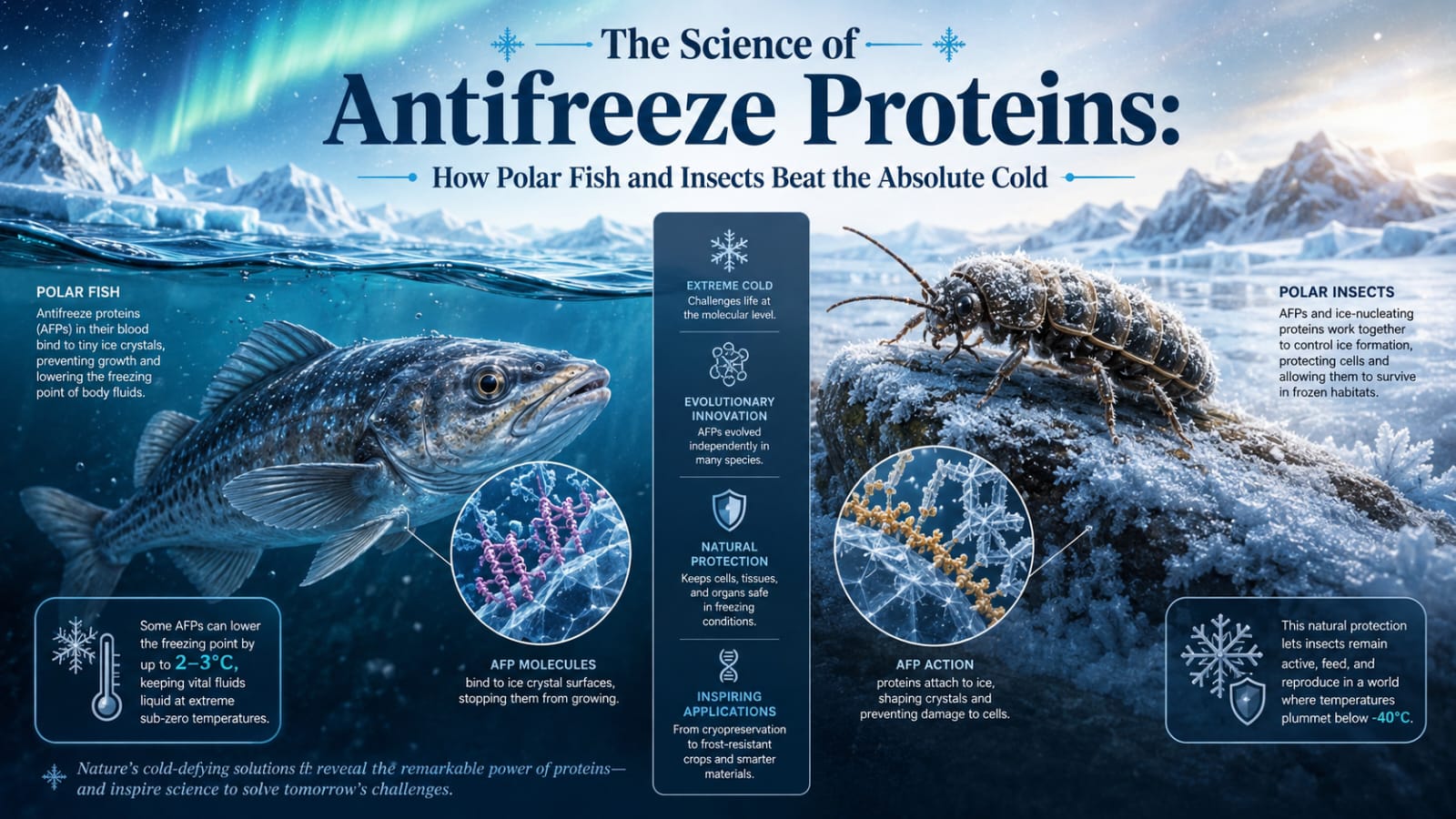
- The Science of Antifreeze Proteins: How Polar Fish And Insects Beat The Absolute Cold

- Magnetoreception: The Hidden Sense That Reads the Planet

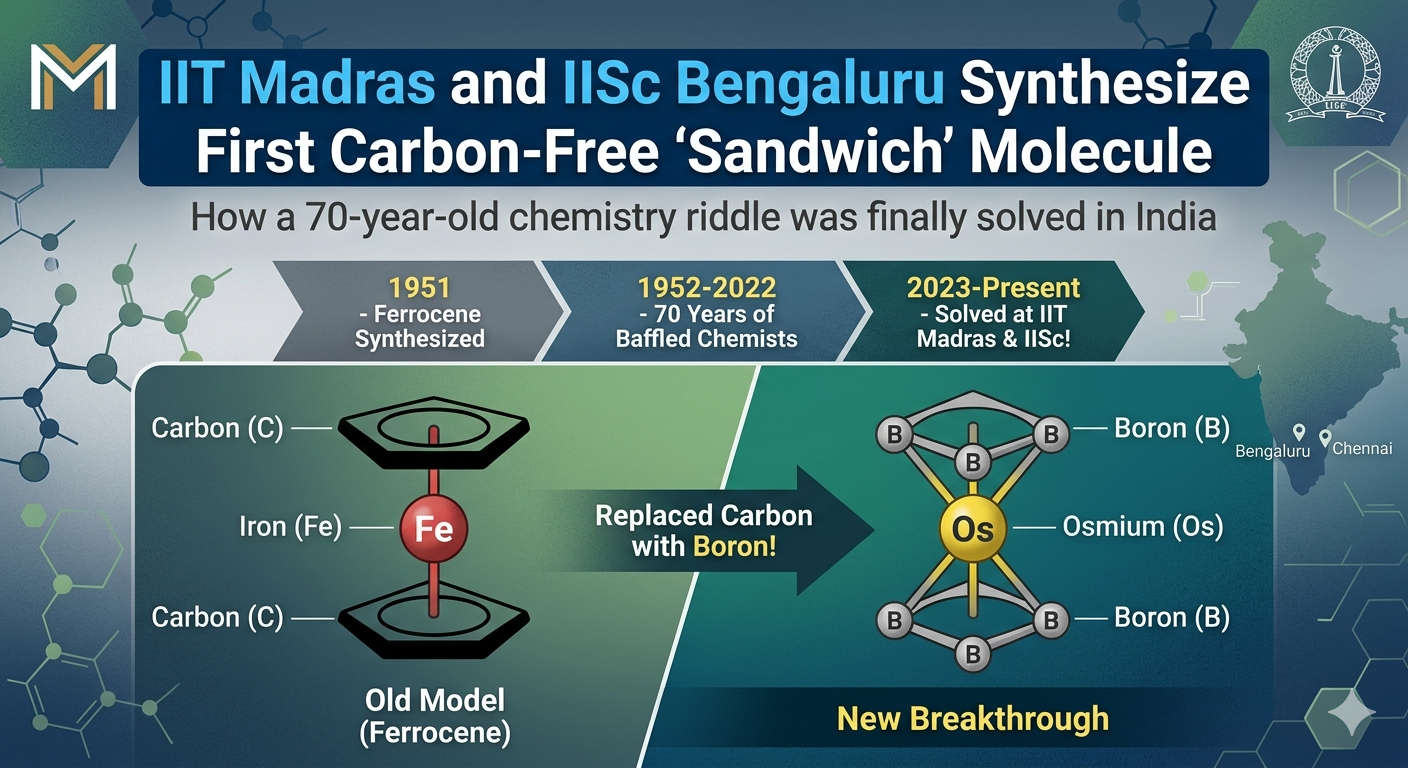
- IIT Madras And IISc Bangalore Synthesize First Truly Carbon-Free ‘Sandwich’ Molecule

- Dark Matter And Dark Energy:The Universe’s Biggest Unsolved Mystery

- The Fermi Paradox: Where Is Everybody?


Leave a Reply