Is the Moon merely a destination, or has it become the eighth continent of Earth’s burgeoning economy?

On April 1, 2026, the silence of Kennedy Space Center was shattered by the roar of the Space Launch System (SLS), propelling four pioneers into the history books. As the Artemis II mission concluded its triumphant ten-day journey on April 10, splashing down safely in the Pacific, it did more than just break records—it signaled that humanity is no longer just visiting the Moon; we are preparing to stay.
The success of Artemis II represents a monumental leap in the Artemis program, a multi-phased endeavor by NASA and its international partners to establish a sustainable human presence on the lunar surface. To understand the gravity of this achievement, we must look back at the foundation laid by its predecessor and peer into the ambitious, high-stakes future of the missions yet to come.
The Foundation: Artemis I and the Uncrewed Blueprint
Before humans could strap into the Orion spacecraft, NASA had to prove the hardware could survive the most hostile environments imaginable. Artemis I, launched in late 2022, was the ultimate “stress test.”
- The Mission: A 25-day uncrewed flight that sent Orion 40,000 miles beyond the far side of the Moon—farther than any spacecraft built for humans had ever traveled at that time.
- The Victory: It validated the SLS rocket’s power and, perhaps most critically, tested the Orion heat shield. Upon reentry, the capsule hit Earth’s atmosphere at 25,000 mph, enduring temperatures of 2,760°C (roughly half the heat of the Sun).
- The Legacy: Artemis I proved that we had the chariot; Artemis II proved we could trust it with human lives.
Artemis II: Breaking the 50-Year Silence
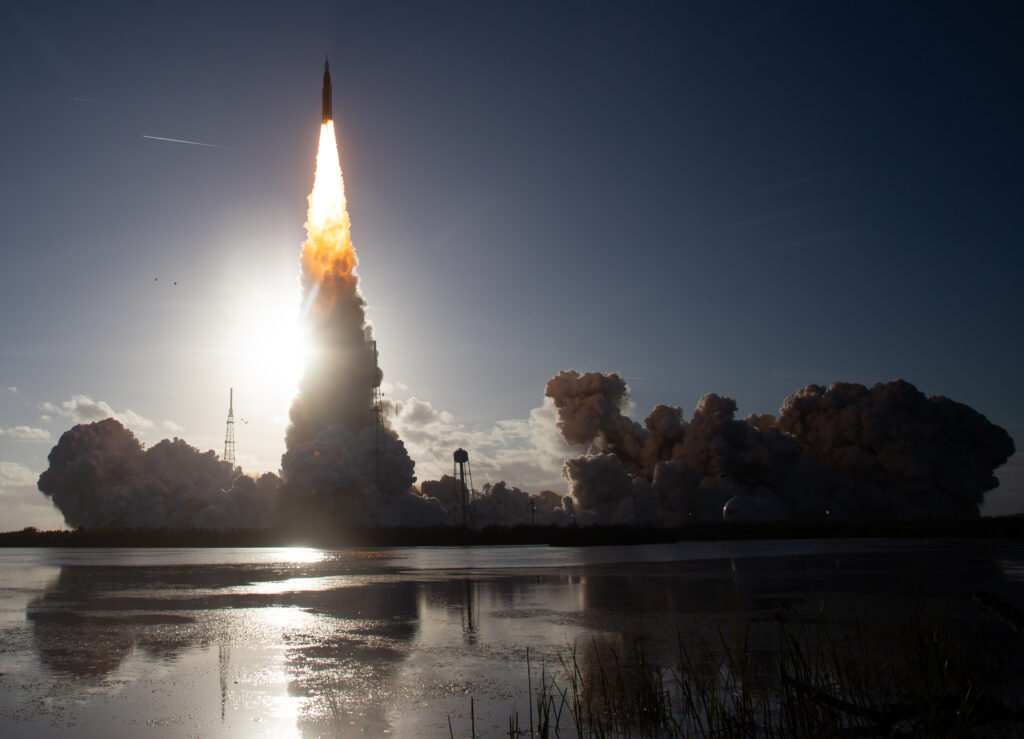
Artemis II was the “Apollo 8” of our generation. For the first time since 1972, humans left Low Earth Orbit (LEO) to venture into deep space. The crew—Commander Reid Wiseman, Pilot Victor Glover, and Mission Specialists Christina Koch and Jeremy Hansen—became the first humans to witness the lunar far side with their own eyes in over half a century.
Record-Breaking Milestones
During their 10-day mission, the crew reached a maximum distance of 252,756 miles from Earth, breaking the record set by the Apollo 13 crew. They also performed a “proximity operations” demonstration, manually maneuvering the Orion capsule near the spent cryogenic propulsion stage to test the ship’s handling—critical for future dockings.
A Scientific and Personal Journey
The mission wasn’t just about speed and distance. The astronauts spotted two new lunar craters, requesting to name one “Carroll” in honor of Reid Wiseman’s late wife, and the other “Integrity,” the name given to their spacecraft. They even witnessed a unique solar eclipse from space, where the Moon blocked the Sun for 54 minutes from their perspective.
The Road Ahead: Artemis III, IV, and the Lunar Landing

While Artemis II was a flyby, the upcoming missions are where the “boots on the ground” reality begins. However, the path has shifted slightly to ensure safety and technical perfection.
Artemis III: The Orbital Handshake (2027)
Originally intended to be the landing mission, NASA recently adjusted the goals for Artemis III. Now targeted for mid-2027, this mission will serve as a high-stakes rehearsal in Earth orbit. The crew will dock Orion with the Human Landing Systems (HLS)—SpaceX’s Starship and potentially Blue Origin’s Blue Moon lander. This mission will test life support, docking, and the new Axiom Space lunar suits in a vacuum, ensuring everything is “mission ready” for the descent.
Artemis IV: The Return to the Surface (2028)
The honor of the first human lunar landing in the 21st century now falls to Artemis IV, scheduled for early 2028. This mission will not only land the first woman and first person of color on the Moon but will also be the first to utilize the Lunar Gateway—a small space station orbiting the Moon that will act as a communication hub, science lab, and short-term habitation module.
The Global Impact: More Than Just a Space Race
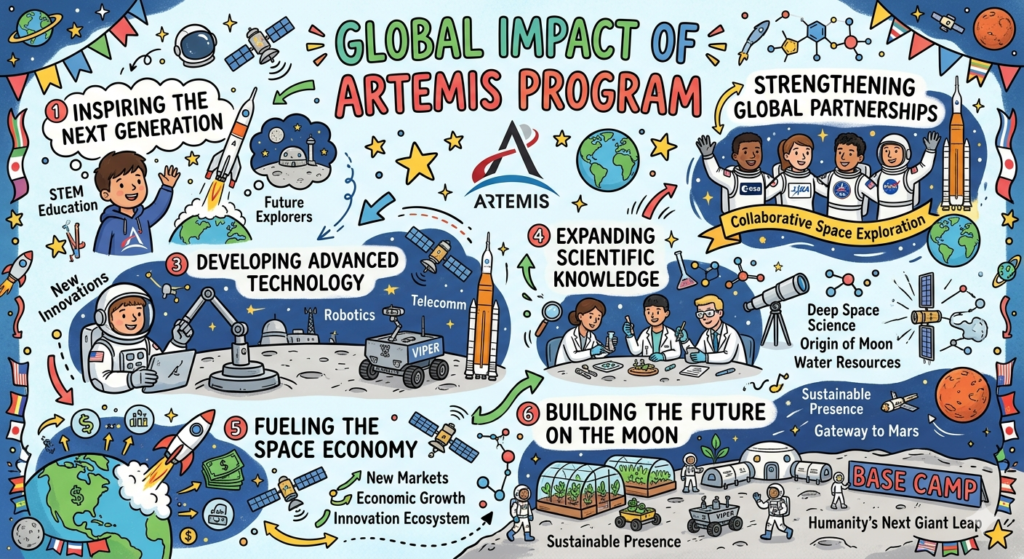
The Artemis program is fundamentally different from the Cold War-era Apollo missions. It is not a race between two superpowers; it is a global coalition.
1. The Artemis Accords and Diplomacy
As of early 2026, 61 nations have signed the Artemis Accords. This legal framework ensures that space exploration remains peaceful, transparent, and cooperative. By establishing “safety zones” and rules for resource extraction, the Accords are creating the first “constitution” for the lunar frontier.
2. The $600 Billion Space Economy
The success of Artemis II has acted as a massive “buy” signal for the private sector. The global space economy reached $613 billion in 2025, with nearly 80% coming from commercial ventures. Companies are no longer just contractors; they are partners. From SpaceX and Blue Origin to small startups working on lunar mining and orbital data centers, Artemis is the engine driving a new industrial revolution.
3. Inspiration and the “Artemis Generation”
Perhaps the most profound impact is the “Artemis Generation.” Unlike the Apollo era, which was seen through grainy black-and-white TVs, Artemis is being shared in 4K, real-time social media, and interactive VR. It is inspiring a new wave of engineers, scientists, and dreamers who see the Moon not as a distant light, but as a future workplace
The Horizon is No Longer the Limit

The splashdown of Artemis II wasn’t the end of a mission; it was the opening of a door. We are moving from a period of “flags and footprints” to a period of “settlement and science.” As we look toward the 2027 docking tests of Artemis III and the historic landing of Artemis IV, the message is clear:
We are going back to the Moon—and this time, we are staying. The lunar dust being kicked up by our rockets is the same dust that will one day build the launchpads for Mars. The success of Artemis II has proven that when humanity aligns its curiosity with its commerce, the stars are no longer the ceiling; they are the floor.



Leave a Reply