NASA’s indefatigable rover uncovers organic compounds that could be building blocks of life, hidden for billions of years in Gale Crater.
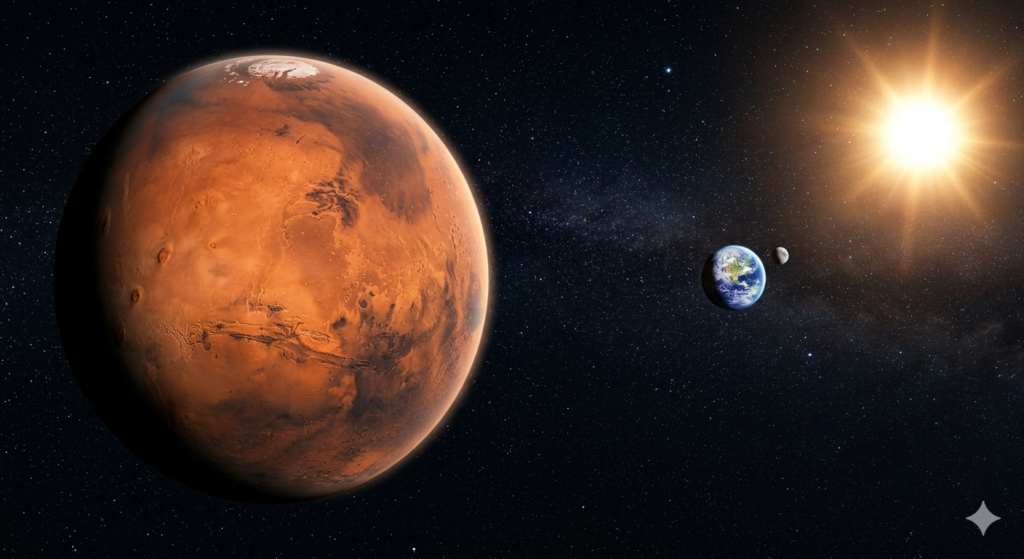
The red dust of Mars has long teased humanity with possibilities. Did it once teem with life? Were its now-frozen plains once lapped by azure oceans? Recently, the Curiosity rover sent back data that has ignited scientific passions and sent a frisson of excitement through everyone wondering about extraterrestrial neighbors.
Curiosity didn’t find a fossilized Martian microbe or a discarded alien tool. What it did find are organic compounds. To be precise, over 20 distinct types of carbon-based molecules, including what appear to be fragments of fatty acids and a precursor to DNA.
Think of it like this: if life is a grand Lego model, Curiosity just found a big box of Lego bricks. It doesn’t prove the model was built, but it proves the pieces were there.
Shadows in the Clay: The Mystery of Gale Crater
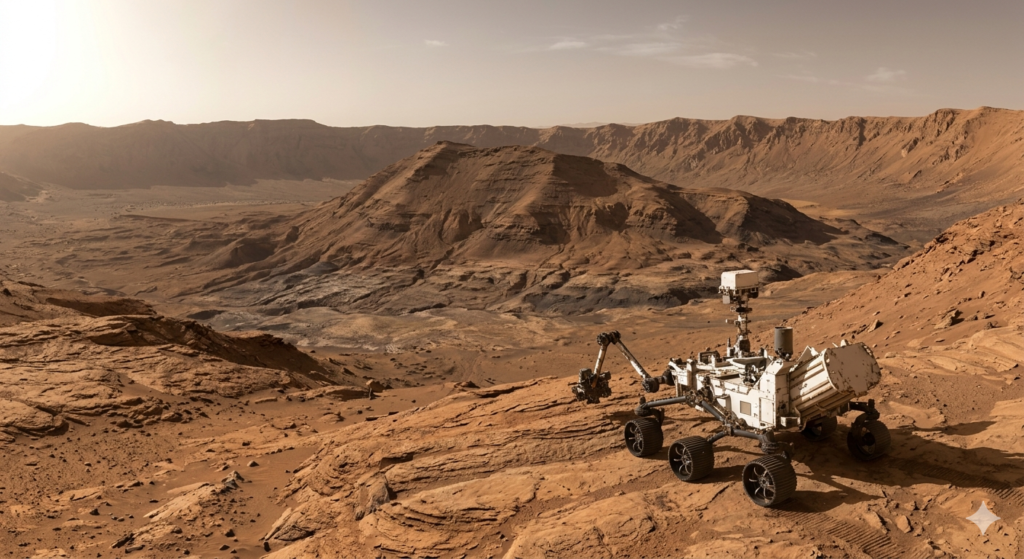
The discovery wasn’t made on the harsh surface, where solar and cosmic radiation sterilize the top layer. It was found beneath, within the mudstones of Gale Crater.
3.5 billion years ago, this crater was a vast, enduring lake. Curiosity’s sophisticated Sample Analysis at Mars (SAM) instrument heated powdered rock samples drilled from this ancient lakebed. The resulting gases revealed a treasure trove of organics, but they also whispered a deeper mystery.
The key to this discovery is clay. These sediments acted like a natural, molecular plastic wrap, shielding delicate molecules from devastating radiation for eons. But as we peer into this “clay vault,” we find ourselves at the edge of a scientific ghost story.
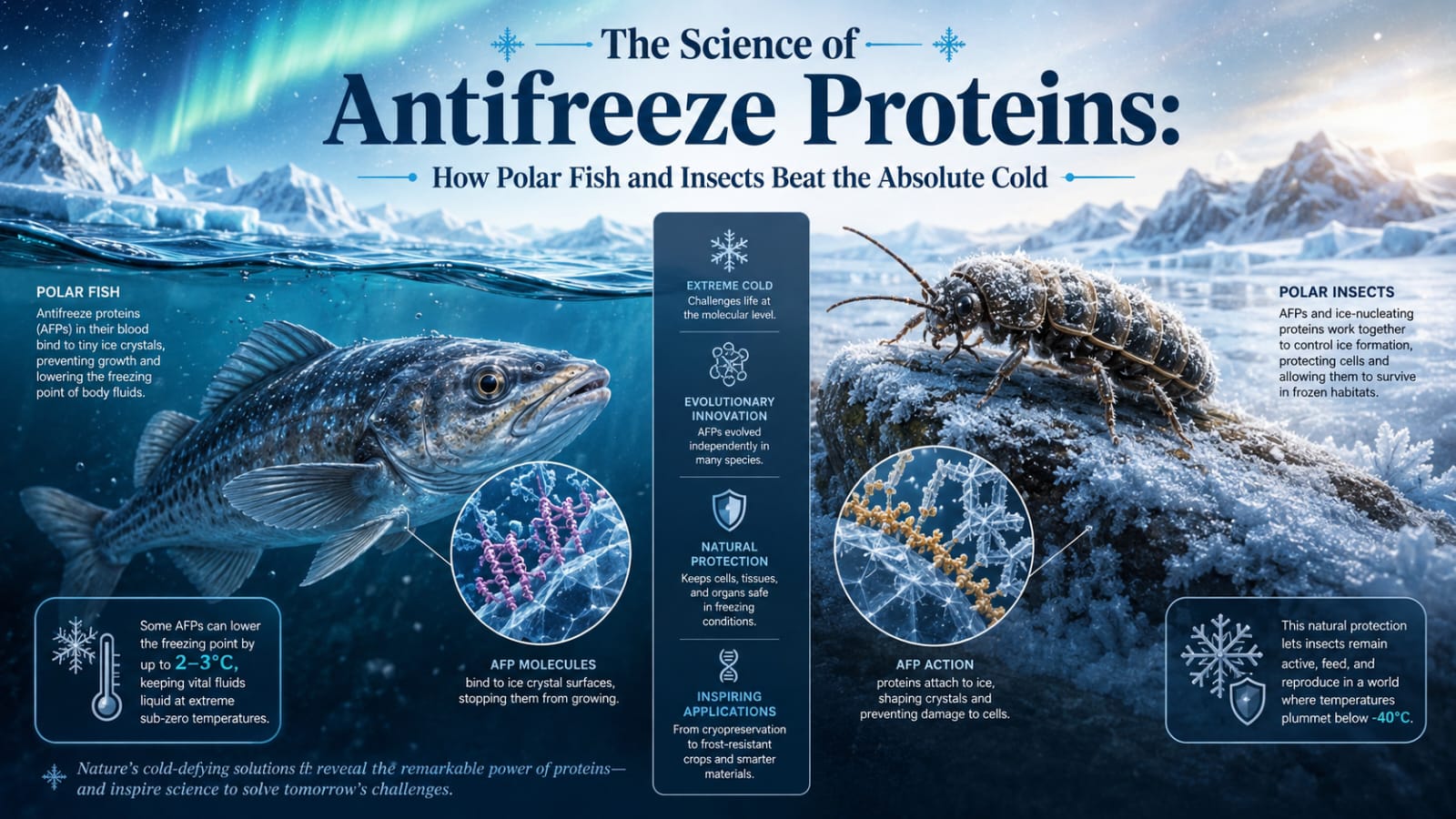
- The Science of Antifreeze Proteins: How Polar Fish And Insects Beat The Absolute Cold
- Magnetoreception: The Hidden Sense That Reads the Planet
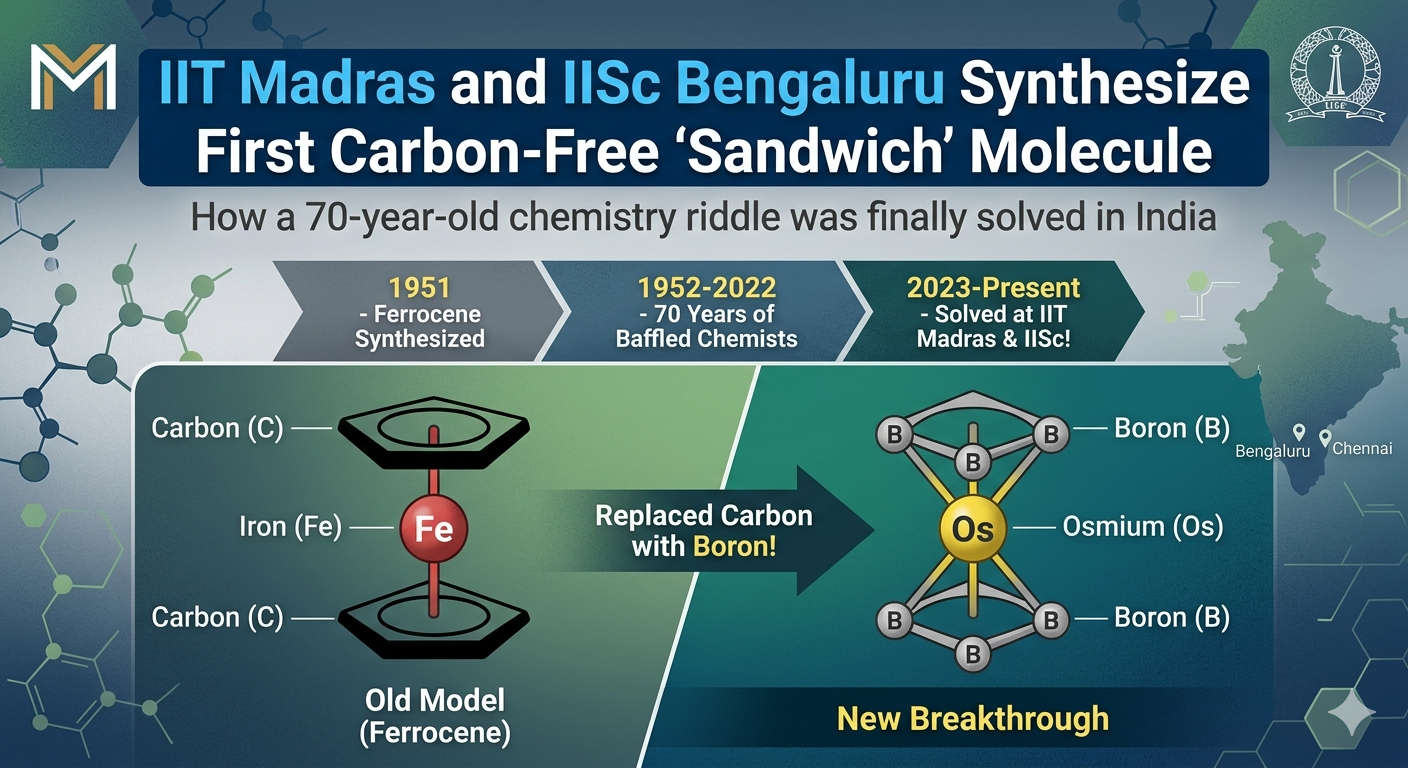
- IIT Madras And IISc Bangalore Synthesize First Truly Carbon-Free ‘Sandwich’ Molecule
- Dark Matter And Dark Energy:The Universe’s Biggest Unsolved Mystery
- The Fermi Paradox: Where Is Everybody?
Speculations: What Kind of “Life” Haunted Mars?
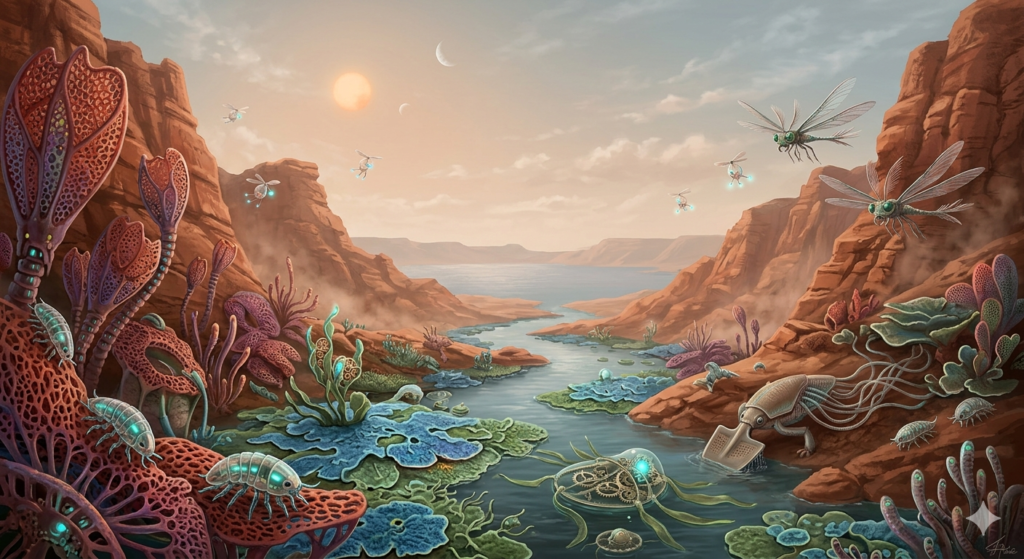
If these carbon chains—decane, undecane, and the nitrogen heterocycles—are indeed the remains of living things, what exactly were we looking at? Scientists are now entering a realm of haunting speculation:
- The Subterranean Refugia: One chilling hypothesis suggests that as Mars lost its atmosphere and its oceans evaporated 4 billion years ago, life didn’t just die—it retreated. These organisms might have migrated deep into the Martian crust, thriving in dark, pressurized pockets of liquid water, far below the reach of any rover. Are we looking at the surface-drifted remains of a civilization of microbes that still exists miles beneath our feet?
- The “Second Genesis”: There is a radical possibility that Martian life was fundamentally different. While we found DNA-like structures, the chemical environment of ancient Mars—rich in iron and sulfur—could have birthed “Extremophiles” unlike anything on Earth. These “Iron-Eaters” might have lived in thick, gooey biofilms on the lake floor, processing minerals in total darkness, a biology so alien it might take decades to even recognize their fossils.
- The Methanogenic Ghosts: Some experts point to the periodic spikes of methane Curiosity has detected over the years. This could be the “breath” of ancient, methanogenic organisms that lived communally in the sediments, their biological signals still echoing through the rocks billions of years later.
Clues of Ancient Oceans
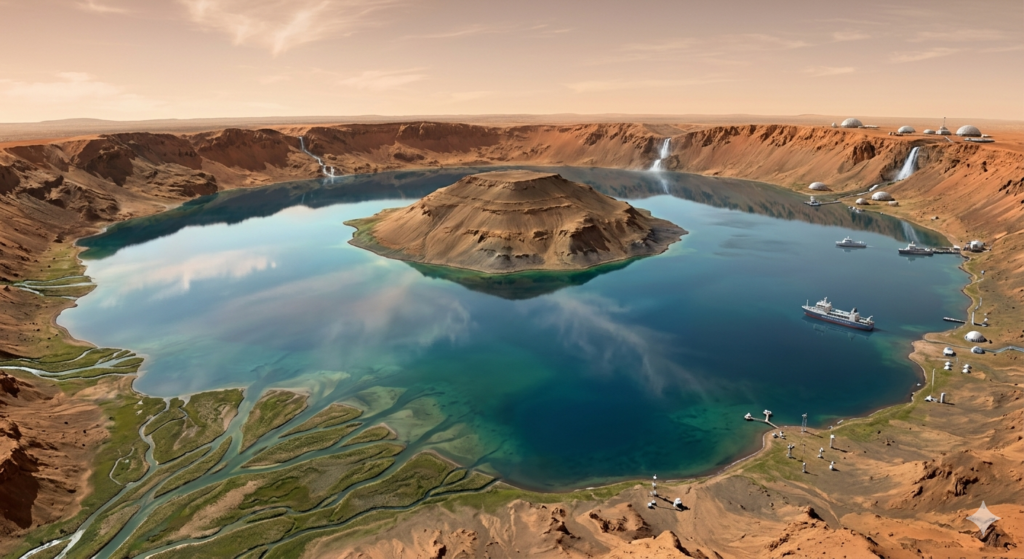
This discovery is magnified by a parallel, reinforcing story: the evidence of a Martian ocean. While Curiosity works in Gale Crater, decades of other orbital and rover data have shown that Mars was once incredibly blue.
For over 30 years, data from orbiters like the Mars Global Surveyor and the Mars Reconnaissance Orbiter have mapped incredible features:
- Paleo-Shorelines: What appear to be the remnants of immense beaches, encircling huge basins in the northern hemisphere.
- Massive Delta Deposits: Formations where mighty rivers, larger than the Amazon, once emptied into these vast water bodies.
- Tsunami Boulders: Distinctive patterns of massive boulders, found in unexpected places, that can only be explained by a cataclysmic, ocean-wide displacement, like a colossal impact tsunami.
These clues suggest that around 3.8 to 3.5 billion years ago, Mars didn’t just have temporary lakes like Gale; it may have had a proper ocean, perhaps covering up to a third of its northern surface. This confirms that ancient Mars was undeniably habitable.
The Road Ahead: Perseverance’s Mission
While we celebrate Curiosity’s success, the definitive answer lies with a different machine. The Perseverance rover, which landed in Jezero Crater in 2021, is currently doing something unprecedented: collecting and caching samples of the most promising rocks for a future “Sample Return” mission.
Perseverance is drilling specifically into an ancient, well-preserved river delta, an environment even more promising for preserving potential biosignatures (unambiguous evidence of life) than a lakebed. It carries more advanced instruments to search for textures and chemical patterns that cannot be made by geological processes.
The samples Perseverance is collecting will be brought to Earth in the early 2030s. Only in the world’s most powerful, state-of-the-art laboratories can we conduct the tests to finally say: “Yes, these organics are the waste product of a Martian microbe.”
Curiosity’s discovery isn’t the final sentence; it’s the exciting conclusion to the opening chapter. It proves the field is set, the ingredients are ready, and our robotic explorers are on the right track in the most thrilling detective story of our solar system.

Leave a Reply